In 2024, nearly 200 philanthropic and impact leaders from around the world gathered in Montecito, California, to share their experiences and perspectives on intersectional feminist philanthropy as part of the inaugural Doing it Differently Giving List Summit. Hosted by The Giving List Women (GLW), the event was created to “strengthen the narrative around the importance of women and girls being viewed as a lens, not a lane, in giving.”
Less than 2% of charitable giving supports the 50,000 organizations in the U.S. dedicated to women and girls — a staggering statistic that inspired the launch of GLW. That number led co-founder and CEO Gwyn Lurie to realize that “whether we give $50 a year or $50 million a year, our greatest chance of moving the needle on any issue we care about is by supporting women and girls — by far the most powerful lever for change in almost every key area of philanthropic focus.”
For nearly two years, GLW has used the GLW Book, the Summit, and a series of curated gatherings to create spaces where philanthropists and philanthropic leaders can engage across silos and turn conversation into collaboration. Recently, they all came together again for Summit 2.0, convening around the central idea that women and girls must be treated as a lens through which every philanthropic and investment lane is viewed.
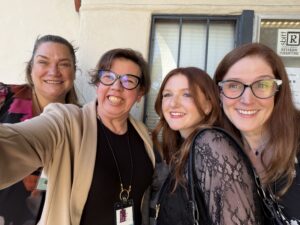 As a Champion Partner, Women Connect4Good (WC4G) joined Summit 2.0 not just as attendees but as active participants. After a welcome reception, the Summit officially opened with the Doing it Differently Dinner, held in several private homes throughout the area, including Dr. Nancy’s. That evening’s dinner — hosted by Dr. Nancy’s daughter Ragan Thomson alongside WC4G team leader Melissa Miller Young — followed the same format as in 2024 with each gathering hosting a GLW moderator to keep discussion topics aligned across the parties and help guests stay focused on the same set of issues. This year, conversation centered on one simple question: “What values fuel your engine for giving?”
At the core of every strong network are personal relationships, and Summit 2.0, like its predecessor, created ample space for connection and collaboration. Through storytelling, intentional gatherings, and conversations among donors, institutional foundations, nonprofit leaders, and changemakers, the dinners, plenaries, breakout panels, and special events created the conditions for trust, partnership, and collaboration. Once again, the Summit proved that when we come together around shared values and shared responsibility, things change.
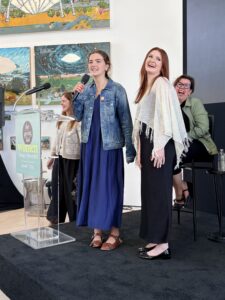 On the topic of shared responsibility, one theme that surfaced again and again was empowering the next generation, and the team from WC4G arrived ready not just to join the conversation, but to lead it. Friday’s Main Stage Plenary, “Setting the Table for Youth: An Intergenerational Model for the Future,” set the tone for day two of the Summit. Melissa Miller Young moderated a panel featuring Sophie Grégoire Trudeau — bestselling author, global speaker, and mental health advocate whose work focuses on emotional well-being, resilience, and human-centered leadership; Ella Robertson McKay, Executive Director of One Young World, an organization that has supported and connected more than 20,000 young leaders across over 190 countries; and Chantale Zuzi, founder of Refugee Can Be and a survivor of war in the Democratic Republic of the Congo who has turned her personal journey into a powerful mission — creating education, mentorship, and leadership opportunities for girls in refugee camps in Uganda.
Sharing WC4G’s mission to empower women and advance gender equality, Melissa noted that we are living through a period of profound uncertainty. The panelists agreed, pointing out that we are also witnessing the rise of a generation ready to lead, and discussed everything from the fresh ways young leaders are approaching global challenges to how we equip and empower them while making sure they have the tools they need for resilience along the way.
At the close of the panel, Melissa summed it up by pointing out how, “This moment is not just about young people stepping up — it’s about how we show up alongside them. The next generation isn’t waiting for permission to lead. They’re already building what comes next. So, the real question isn’t whether they’re ready — it’s whether we are.”
“Are we ready to share power?” she asked. “Because if we get this right, we don’t just support the next generation — we create the future we all say that we want.”
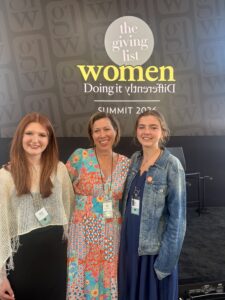 Investing in the next generation, Melissa reminded the room, isn’t just an idea. It’s something we have to actively build — the way WC4G has been building Connect4Impact. With that, she introduced Claire Sakaoka, Connect4Impact Program Coordinator, who spent the next several minutes outlining the new initiative and sharing her experience building the program, assembling the team, and leading the inaugural cohort.
Claire then introduced Chloe Irwin and Joanna Faucett, two young impact leaders representing the inaugural C4I cohort. Through C4I’s participatory grant component and subsequent Giving Circle, participants learned to make real decisions about how to invest in the future of women and girls — not only by investing dollars, but by investing in the ideas, values, and voices shaping the world. The cohort was tasked with being thoughtful, collaborative, and strategic, and through the months-long process, they learned how to make sure that each organization on their list reflected the kind of change they wanted to see.
The cohort had arrived at a unanimous decision on who would receive the grant earlier in the month, and Irwin and Faucett took the stage to announce that the $10,000 grant would go to Women’s Economic Ventures, a nonprofit dedicated to the economic empowerment of women. CEO Nicki Parr was in attendance and thrilled when they named the organization.
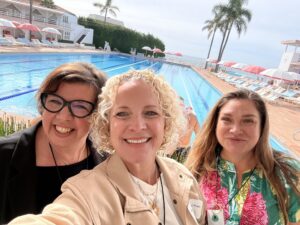 As Summit 2.0 drew to a close, GLW returned to the heart of their work: when women and girls are centered across philanthropy and investing, outcomes improve across entire systems. The post-conference message captured the spirit of the gathering — “clear-eyed, values-driven, and grounded in the belief that we do not have to agree on everything to work together.”
For WC4G, that spirit is more than a closing reflection — it’s a working philosophy. We support women and girls as a lens across sectors, and know without a doubt that by doing so, we strengthen our impact everywhere.
Summit 2.0 reminded us that the most meaningful change does not often come from a single voice, a single sector, or a single generation. It comes from what we build together — and from the rooms where seasoned philanthropists sit beside emerging leaders, where dinner conversations turn into partnerships, and where a question as simple as “what values fuel your engine for giving?” can chart the course for the work ahead.